The Tool Watches: Chronographs
The golden era of mechanical chronographs spans from the 1930s through the 1970s. These instruments were critical tools for aviators calculating fuel consumption, and race car drivers measuring lap times via tachymeter scales.
Patina Evaluation
True patina is a chemical reaction that occurs slowly over decades. The luminescent material, whether radium or tritium, should exhibit a uniform, textured degradation. Artificial aging often appears too flat or perfectly even. When evaluating a vintage chronograph dial, inspect the typography closely under a loupe—the print should sit atop the dial surface with crisp, unbled edges, even if the surrounding paint has developed a "tropical" brown hue.
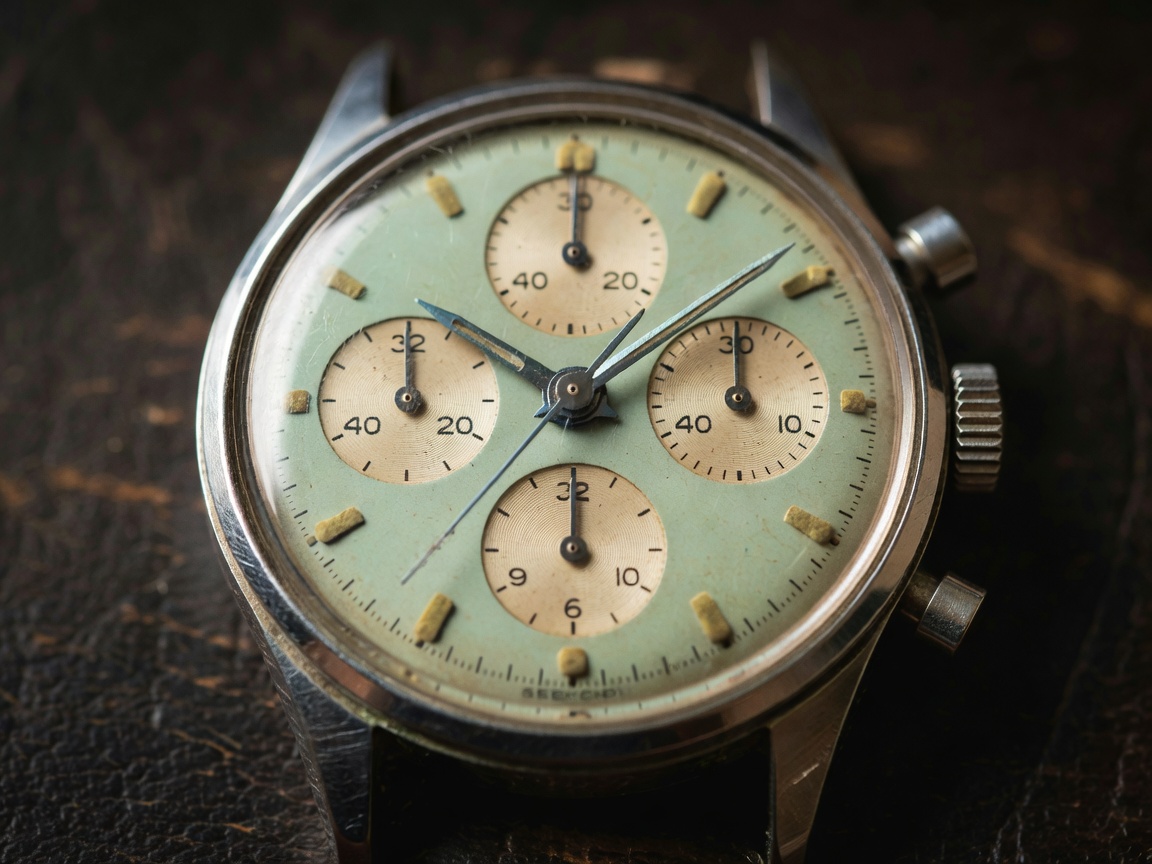
The Bi-Compax Layout
Circa 1940s | Hand-wound
Featuring two subdials—running seconds at 9 o'clock and a 30-minute register at 3 o'clock. A classic layout favoring legibility.
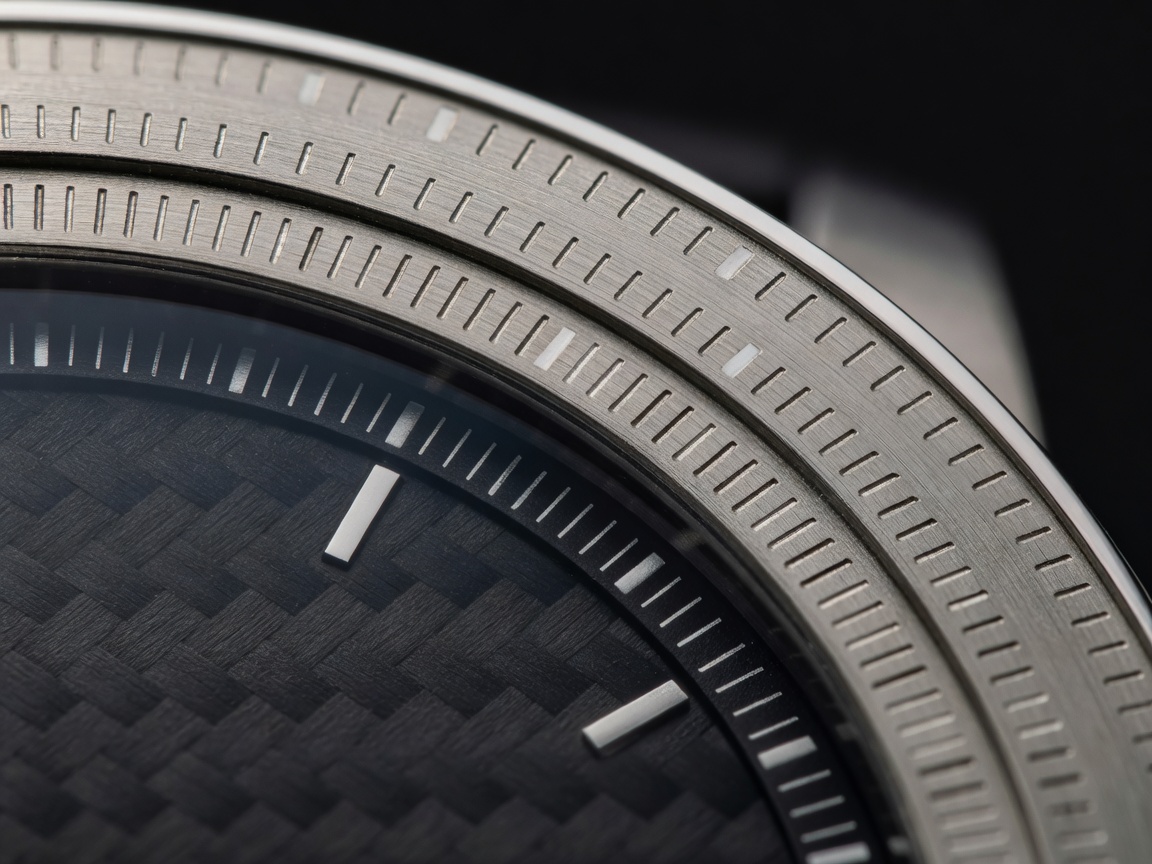
The Tachymeter
Base 1000 | Outer track
Designed to measure speed over a known distance. Crisp printing of the numeric scale is paramount for authentication.
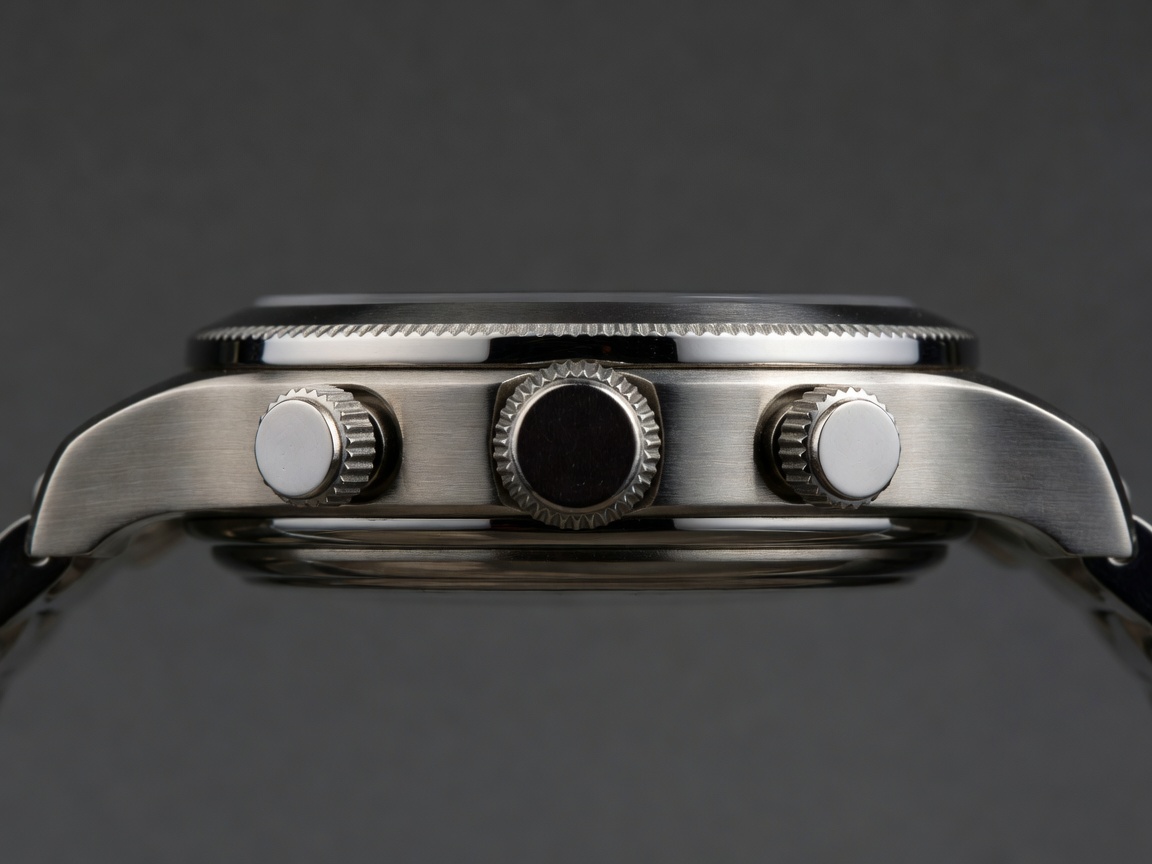
Pump Pushers
Non-waterproof | Steel
Early chronographs utilized simple pump pushers. Later iterations introduced screw-down pushers to ensure water resistance.